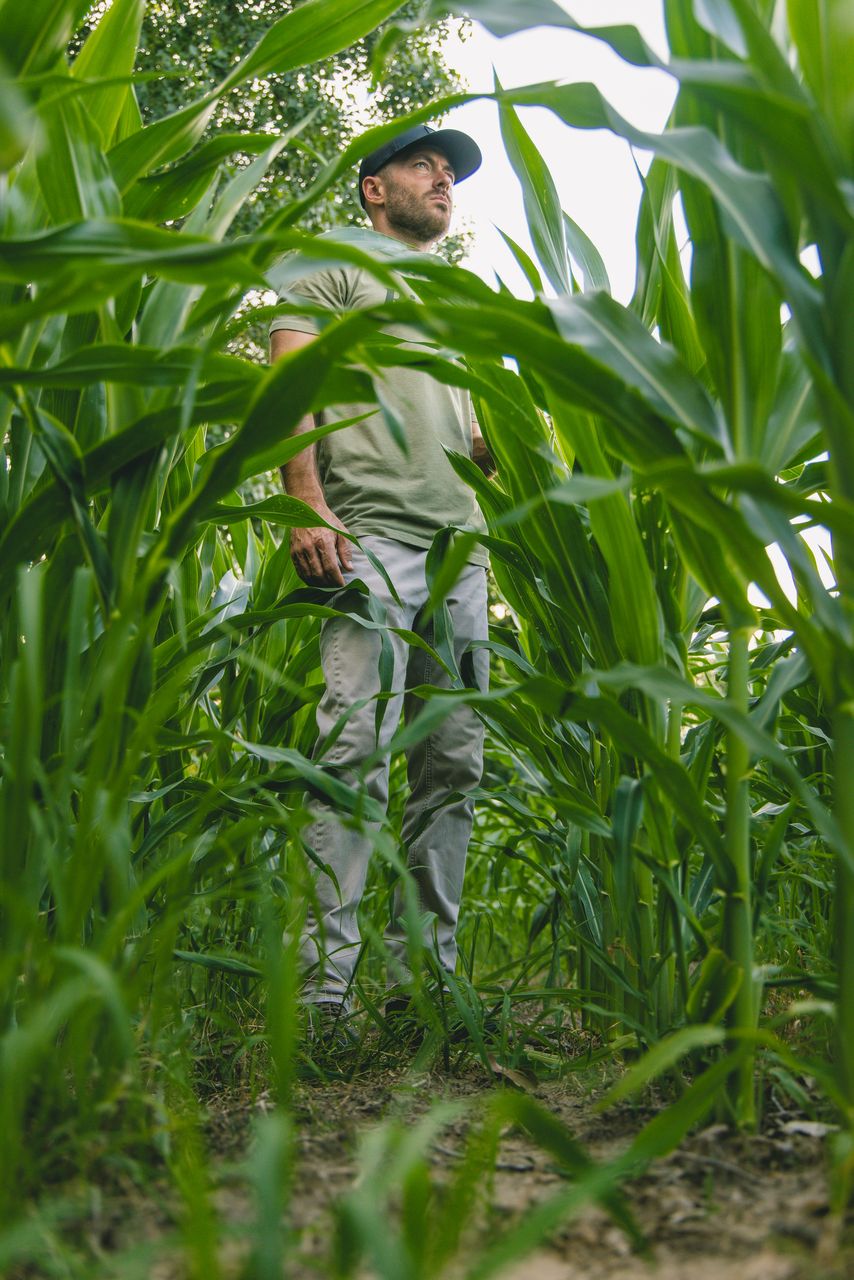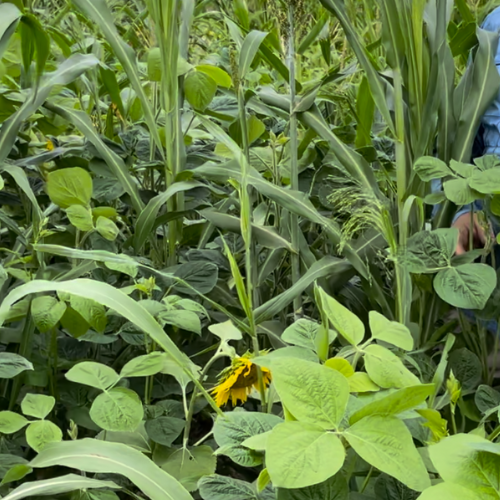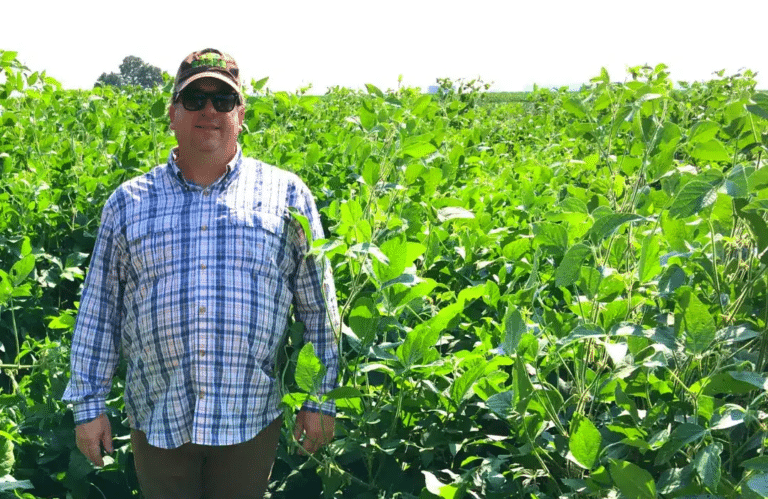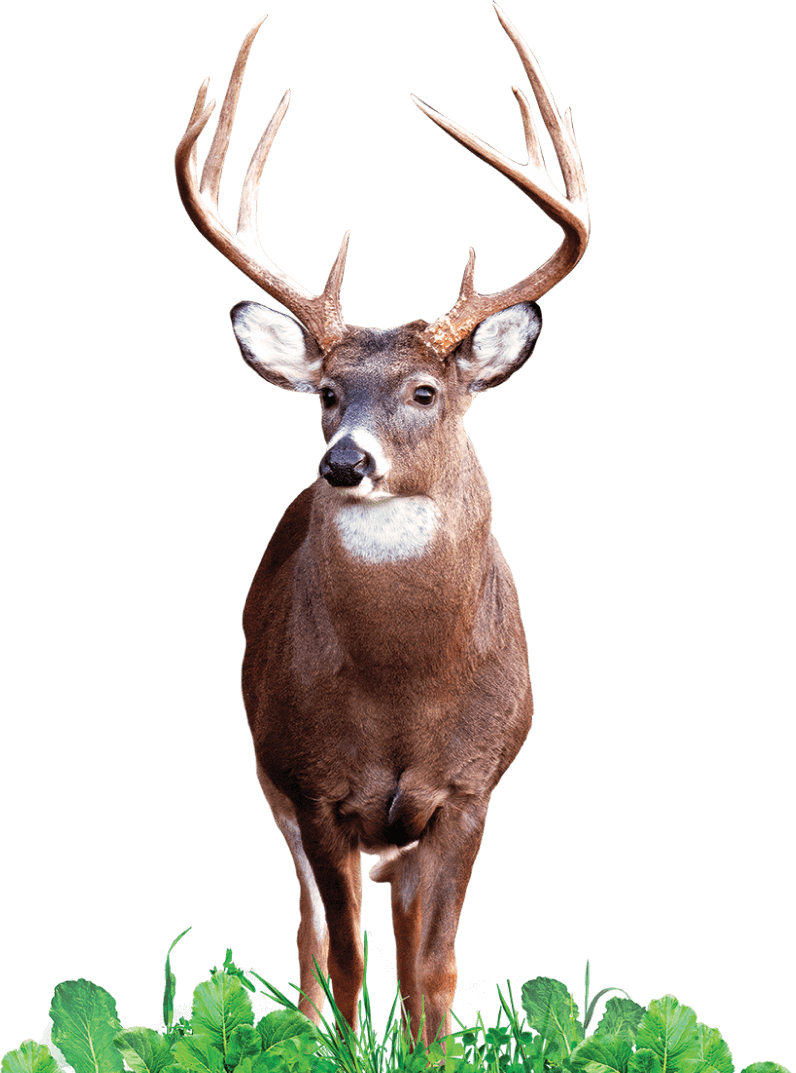
Brad is showing the difference in plant heights
among a traditional forage soybean and Eagle
Seed Forage soybeans (the Eagle Seed
Company soybean is pictured on the right).
Outdoor Life Article 2008
Video Courtesy of the Quality Deer Management Association.
Product: Eagle Seed's
Wildlife Manager's Mix RRTM
Show Title:  Quality Whitetails Television, "Managing for Smaller Properties"
Featured on the
Outdoor Channel; SPRING 2009
EAGLE SEED COMPANY
"The summer-plot crops that Kinkel suggests are Roundup Ready
soybeans and some of the new hybrids from Eagle Seed Company in
Arkansas.  Eagle's Big Fellow RR soybeans yield an incredible amount
of leafy Forage through the summer, which provides food for deer.

"Deer want the leaves more than the beans, and you can even mix
them in with something like milo or corn to create some incredible
forage, " says Kinkel.  "Some of the newer "runner" beans grow up the
stalks and produce a huge volume of food, and with the Roundup
Ready corn and beans you get a two-season annual crop."
Kinkel has been consulting with a project in central Georgia known as
the Ocmulgee Banks, where he's been testing and analyzing the Big
Fellow RR beans.  

"I'm blown away -- some of the plots are producing 14,000 pounds of
food per acre, he says.  "I've seen their crops grow to six feet tall in
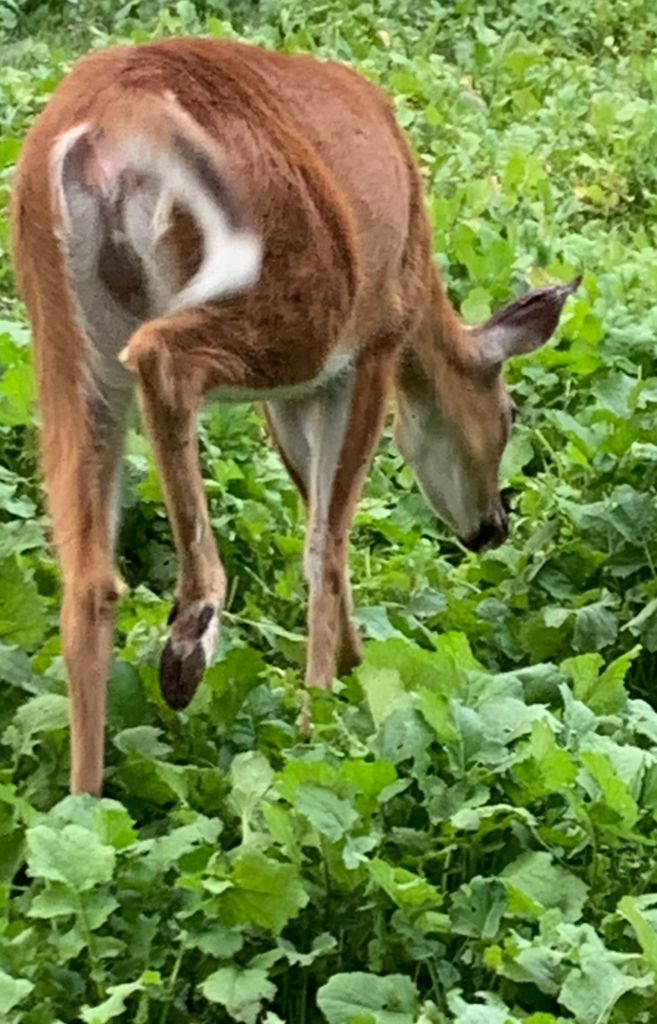
poor soils.  The growth is so great in these fields that deer are not only
feeding in them, but bedding in them as well."
Courtesy of Outdoor Life Magazine August 2008.  
Big Fellow RRTM, Game Keeper RRTM and Wildlife Manager's Mix RRTM

Article: "Quick Hitter Food Plots"
By: Alan Clemons,  Interview of Bryan Kinkel
Hunting Bonus HB1-3
Copyright  2008.  Property of Outdoor Life Magazine.
Pure Seed Scientifically Selected for Top PerformanceTM
"Now I think I've finally come upon the best area crop for a
summer plant: soybeans.  But not just any soybeans.  These
are special varieties developed by Eagle Seed Company...
They have developed "beans" that
grow twice as tall as
regular soybeans, with
much larger leaves.  The beans are
"Roundup Ready" so weed competition can be controlled.  
Most importantly, they've developed soybeans aimed
primarily at providing forage with the leaves, not seeds to be
harvested in the fall.
Thinking Ahead and Preparing Our Food Plots
By Gerald Almy; Editor of Sports Afield Magazine
Article courtesy of The Northern Virginia Daily.
Date of print:  Tuesday, December 9, 2008;  Page C5
Product:  
Large Lad RRTM and Big Fellow RRTM
Author:  Gerald Almy, the hunting and fishing editor of Sports Afield magazine.  He has written for Gray's Sporting
Journal
, Fly Fisherman, and numerous other publications.  He has a recurring outdoor column appearing in the
Tuesday edition of
The Northern Virginia Daily.  
This is what the deer manager wants most - a prime summer forage for whitetails to eat from May through
the first frost.  One of the types Eagle offers is
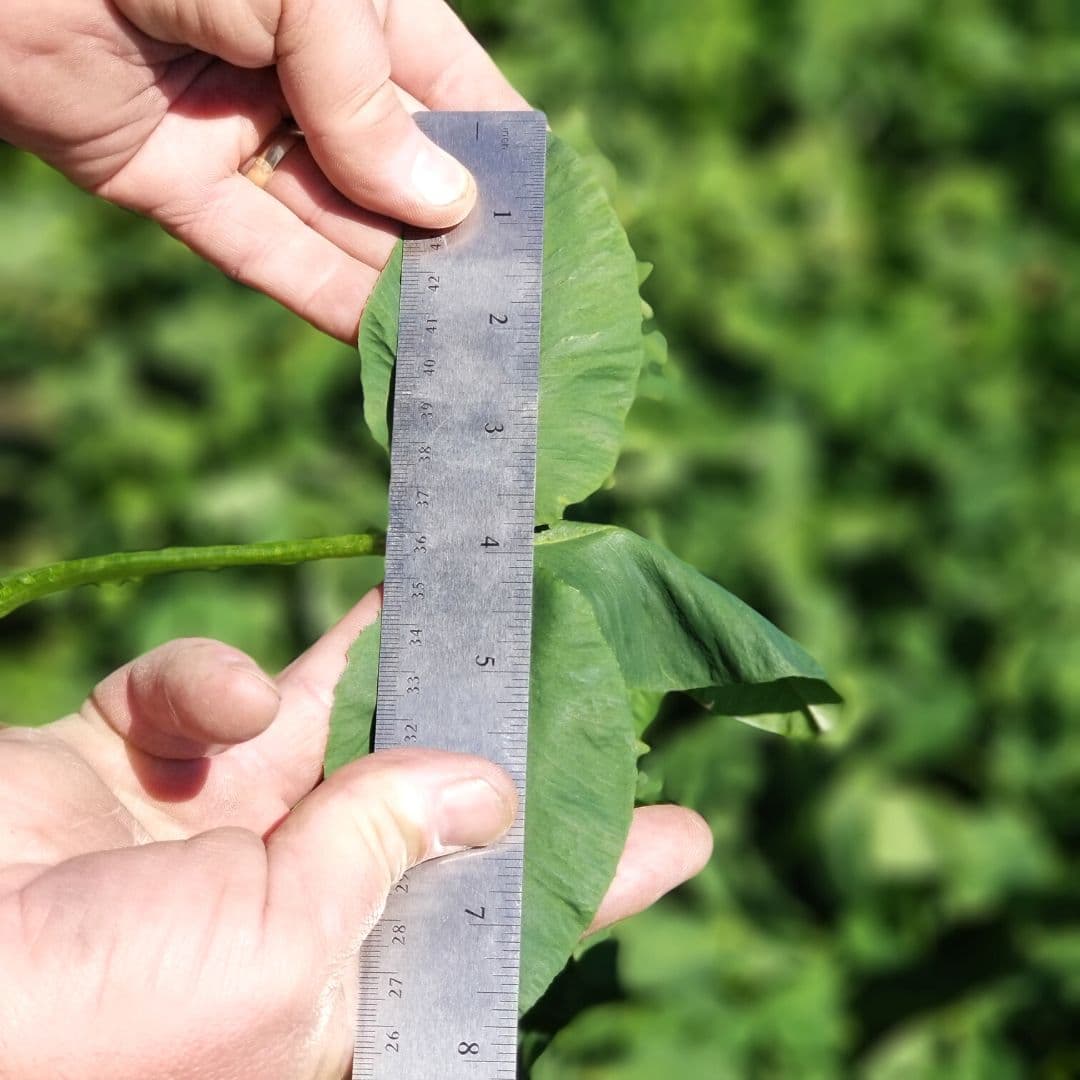
Big Fellow RR.  This soybean is the number one mass
producer and can grow leaves larger than eight inches
while being extremely drought tolerant.  

They key advantage is that these beans have a longer growing cycle before they bloom.  Even after most
soybeans bloom, these can continue growing and
producing high-protein forage for deer (or cattle) for
up to six weeks longer.

In fact, these soybeans grow so tall that deer will not only eat the leaves, but they'll bed down in fields of
them and use the vegetation as cover.  Most importantly of all, though, perhaps for our area is that they
are
drought tolerant.  
Large Lad RR is another soybean offered by Eagle Seed.  This is the official soybean of the Mississippi
Fisheries and Wildlife Department.
 It has excellent deer-browsing tolerance and can grow up to 84 inches
high.  It is also very bushy and is resistant to most foliar diseases, phytophthora root rot, stem canker and
several races of nematodes.  

Its bushy nature makes this an excellent choice for other small game species and quail.  One study done
in Georgia on the Ocmulgee Banks Farm showed that Eagle Seed soybeans yielded seven tons of forage
per acre...this spring after I put in some Big Fellow RR and Large Lad RR soybeans I'll have something
substantially green, and high in protein for the local deer to dine on when the clover dries up in early
summer.
26
Leaf
Protein
Secrets to Successful Warm-Season Food Plots
By Brian Sheppard
For maximum production, nutrition and palatability, nothing beats the large-seeded legumes.  I have
experimented with many forage varieties over the past nine years.  Lablab, ebony cowpea and
Roundup
Ready Large Lad forage soybeans
are among my favorites because I can grow them in a variety of soil types.

Article courtesy of Quality Deer Management Association
Journal:  Quality Whitetails
Product:  
Large Lad RRTM
Brian is a food plot consultant from Georgia and owner of Wildlife Landscape Services.  He is also a celebrity
food-plotter with customers such as Jeff Foxworthy.
Copyright 2009.  Eagle Seed Company.  All Rights Reserved.  
Mali Vujanic uses
Eagle Seed Forage
Soybeans.  In this
video, he shows the
benefits of planting
Wildlife Manager's
Mix RR
TM with corn.
Mali is a
professional wildlife
food-plot consultant
and owner of
Outdoor Essentials,
LLC.  
*Protein Equal to Alfalfa
 "Two new forage soybean varieties have the potential to produce more than 9 tons of dry matter per acre with up
to 28% protein, university research has shown...Compared with other forage and food-plot varieties, they grow taller
with bigger leaves and have greater browsing tolerance.  The varieties were grown at Southern Illinois University,
LSU Ag center in Louisiana, and Oklahoma's Noble Foundation in 2008.  
 "They're awesome," Dr. Atkinson (forage specialist at SIU) says.  "They got up to almost 6" tall."  
  Twain Butler, research forage agonomist, said "from the time we planted until we harvested, we didn't get any rain
at all."  Still, he harvested approximately 1 ton/acre of soybean forage on a dry matter basis at one location which
was more than he got from any of the 20-some other summer legumes in the test.  The other species included
lablab, cowpeas, burgundy beans, lespedeza, wild beans, prairie acacia, and bundleflower.  "Initially, they left all the
other summer legumes and took out the soybeans," he says.  "I had a slew of legumes, and the deer didn't like the
other ones as well.  LSU Ag Center animal scientist, Guillermo Scaglia, grew 39.5 acres of forage soybean and made
bale silage for wintering a beef cow herd.  He harvested late due to 2 hurricanes, but harvested 316 round bales
weighing 1400 lbs each, or about 5 tons of dry matter per acre.  The soybeans also help to control weeds and add
nitrogen to the soil, Scaglia points out.
                                                                  Text is courtesy  Hay and Forage Grower.  Copyright 2009.
"They're Awesome"
These Forage Soybeans Can Deliver Yield and Quality, Research Shows
Excerpted from March 2009 Issue Hay and Forage Grower Magazine
RR Soybean Tonnage