
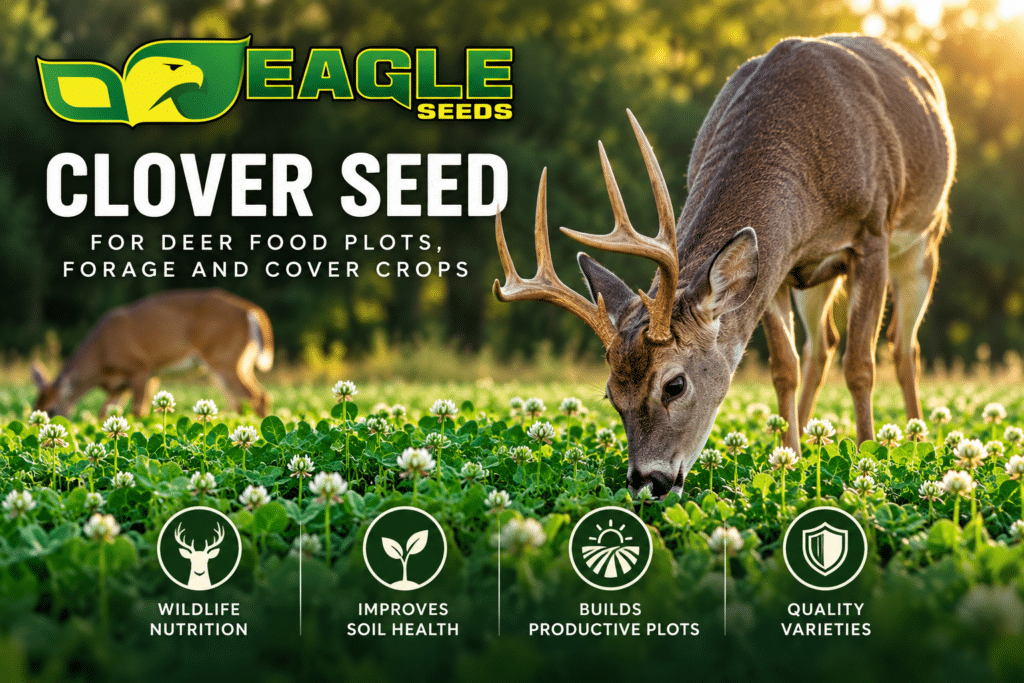
Looking for the best clover for your food plot? Eagle Seed offers single clover varieties and custom blends for deer, wildlife forage, and cover crops. Choose from annual and perennial clovers, including Fixation™ Balansa, Frosty™ Berseem, Dynamite™ Red, Kentucky Pride™ Crimson, and Domino Ladino. Our blends combine complementary forages to meet your food plot goals, soil conditions, and growing seasons.
Stop by our clover education page to learn about all the different clover species and read our FAQs.
Clover Seed Planting Tips:
Choosing Clover Varieties by Region
The best clover depends on location, soil, and planting season. We have answers to your specific soil type and climate. In the Southeast and Mid-South, crimson, Arrowleaf, and Balansa clovers are popular annual options, while berseem can fit certain planting systems. In the Midwest and Mid-Atlantic, Ladino, red, and Balansa clovers offer options for annual and perennial food plots. In the Northern regions, red and white clovers are top choices for perennial stands. Across the southern Great Plains and areas with heat and limited rainfall, variety selection should account for heat, drought, and soil conditions. The right selection gives your clover a better chance to establish and produce forage – if you don’t know, let our crop consultants help – 870-684-7377.
Where to Plant Clover
Clover works well along shady, tree-lined edges and in smaller food plots. For larger, open areas, consider Eagle Seed forage soybeans instead. They can produce substantial forage while helping meet wildlife feeding goals. Choose the crop based on your available space, sunlight, and management goals. This helps you match the planting to the conditions on your property.
When to Plant Clover
Fall is the preferred planting season for many annual clovers. In general, aim for early fall, from September to early October – but let moisture be your guide. This gives plants time to establish before freezing temperatures arrive.
As a rule, plant at least 40 days before your expected first freeze. Spring planting is another option, usually from February through May, when the soil is moist and workable.
For best results, broadcast the seed evenly over the soil surface. Then, lightly cover it to improve seed-to-soil contact. Avoid burying the seed too deeply.
Eagle Seed Clover Blends
- Top Five Annual® Clover Blend – Best clover for drought prone, heavy clay and low pH
- Clover Keeper® Perennial Clover Blend – Best clover for perennial, best for pollinators
- Buffalo Clover® Blend – Best first year clover plot
- Green Keeper™ Alfalfa and Clover – High protein productive alfalfa paired with the perfect clover
- Hunt Master® Chicory and Clover – Best clover plot for protein rich forage and the deep chicory tap root for complementary nutrition