
Buck Monster Wheat™
Forage Wheat
Buck MonsterTM is the exceptional forage wheat variety for your deer and for great seed yields on your farm. Buck MonsterTM plants are tall, featuring large, long, and flashy seed heads that produce excellent quality grain for doves or turkeys.
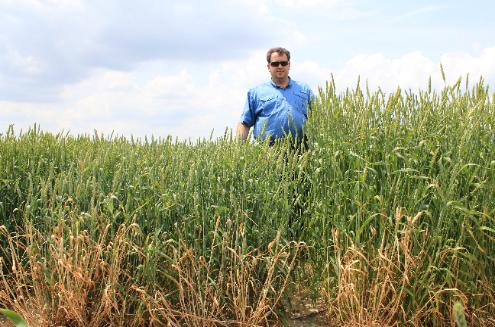
The Buck MonsterTM plants are incredibly winter hardy and have monster tillers. The monster tillers mean more seed heads and ultimately more seed yield. Buck MonsterTM develops a thick canopy of high quality straw. Buck MonsterTM performs well on many soil types. Buck MonsterTM has wide adaptability making it a genetically great performer from Wisconsin to Arkansas.
Why Forage Wheat?
- Most economical fall food plot
- Hardier, higher quality cereal
- Monster Tillers
- Higher Seed yield
- Performs well from WI to AR
- Emerges fast
- Higher in protein
- Much better winter hardiness than oats
- Deer will eat the seed kernels
- The original throw and grow style plot
1. Planting Window
· Fall wheat: Plant when soil temps drop below 60°F but before the first hard freeze.
· Spring wheat: Plant as soon as fields are fit and soil can be worked.
2. Seedbed Preparation
· Aim for a firm, level seedbed with good moisture.
· Light tillage or no-till both work as long as residue is evenly spread.
3. Seeding Rate
· Drilled: 90–120 lbs/acre
· Broadcast: Increase by 10–20% to ensure good stand
· Adjust higher for late planting or poor seedbed conditions.
4. Planting Depth
· Target 0.5–1.5 inches deep.
· Avoid planting deeper than 2 inches to prevent weak emergence.
5. Row Spacing
· Standard spacing is 7–7.5 inches.
· Wider rows (10–15 inches) are acceptable in no‑till systems.
6. Fertility
· Apply 19-19-19 at 400 lbs per acre.
7. Weed Control
· Start with a clean seedbed—either tillage or a burndown herbicide. Roundup can be used as a burn-down, but not over the top.
· Use labeled post-emergence herbicides as needed based on weed pressure.
8. Pest & Disease Management
· Choose disease-resistant varieties when possible.
· Scout regularly for aphids, armyworms, rust, and leaf spot diseases.
9. Harvest Timing
· Harvest when grain moisture reaches 13–15%.
· Avoid delays to reduce shattering and lodging losses.